Views: 10
- This milestone strengthens coverage and the quality of mobile services in an area of high value due to its geography, history, and ancestral heritage.
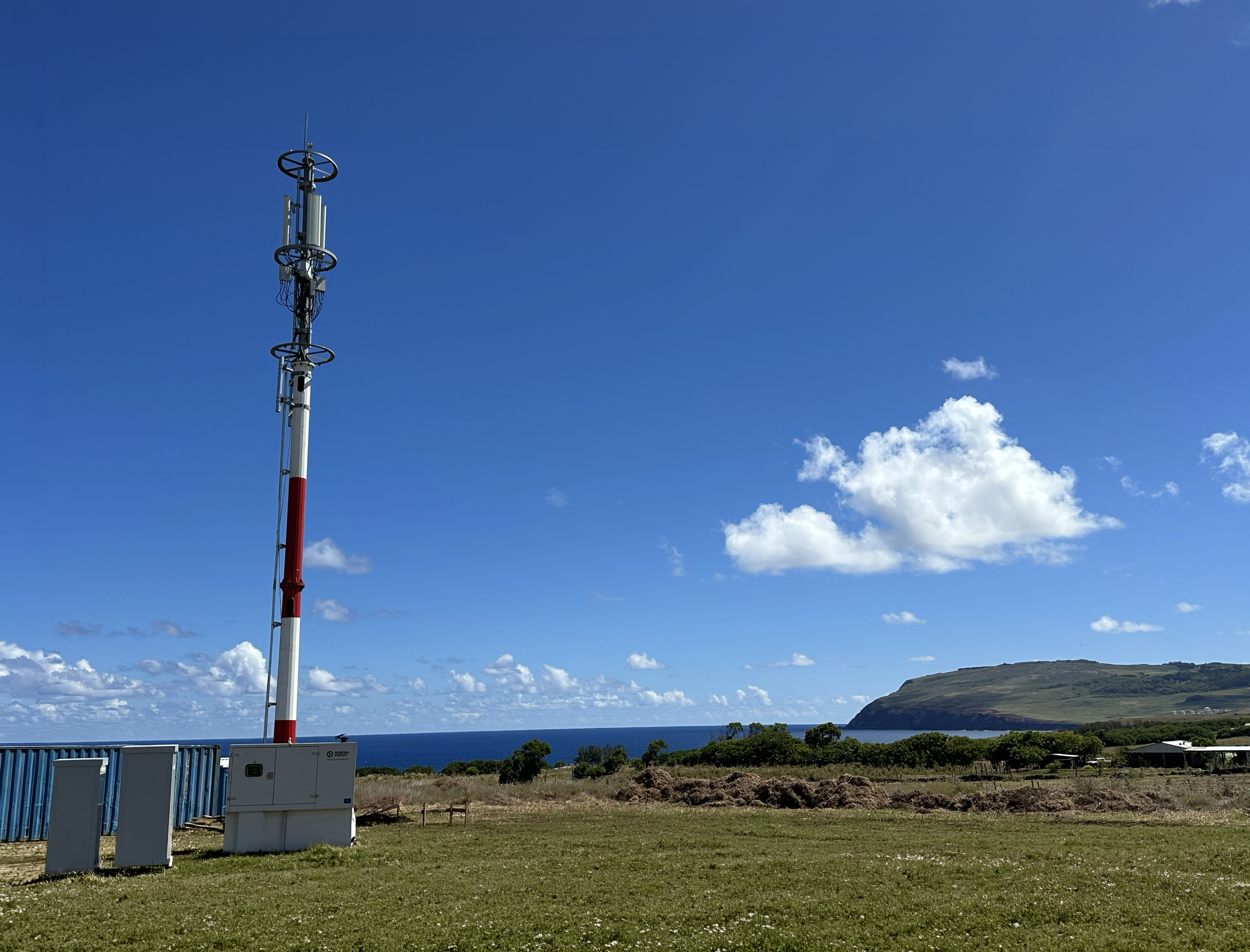
February 18, 2026. — WOM continues to uphold its commitment to the 5G Project, reaching a new milestone in the deployment of its network in the country’s most remote and extreme locations. In this context, the operator, which has more than 6,300 proprietary antennas, announces the arrival of its signal in Rapa Nui, providing connectivity at the most distant point of the national territory, more than 3,500 kilometers from mainland Chile.
The new antenna strengthens the digital integration of local residents through high-speed technology and will provide internet access for the tourists who visit the island each year. It is worth noting that the antenna will soon feature 5G technology, enabling faster browsing speeds and lower latency.
Likewise, the installation of WOM’s digital infrastructure on the island strengthens coverage and the quality of mobile services in an area of significant value due to its geography, history, and ancestral heritage. Furthermore, internet access directly benefits local communities, schools, productive activities, and its research center, among other services.
“Our arrival in Rapa Nui is a concrete sign of our purpose to connect all people across the country. We are proud to have a high-performing team that has been able to bring our network to areas where geography has posed major challenges,” highlighted María Paz Cerda, Chief Corporate Affairs Officer at WOM.
The executive added that “This milestone not only expands access to digital services but also promotes territorial integration and contributes to the country’s sustainable development.”
The antenna located in Rapa Nui joins other iconic locations that are part of the 366 Mandatory Localities of the 5G Project, including Punta Dungeness, the Chilean Antarctic Territory, and Tierra del Fuego, among others.
WOM’s arrival in Rapa Nui confirms the company’s purpose of providing connectivity to more than 20 million people in Chile, thereby reducing the digital divide. With more than 6,300 proprietary antennas, WOM reaches farther to be closer, positioning itself as one of the operators with the widest national coverage.
What is a “Mandatory Locality”?
A Mandatory Locality is a specific area of the country that the State defines as a priority for receiving mobile connectivity, and whose coverage is a legal obligation for companies awarded a telecommunications tender.
These areas correspond to regions where the Chilean State ensures that access to connectivity is not concentrated solely in large cities, but also reaches rural, isolated, or underserved locations.
The 366 localities awarded to WOM are part of the social commitment of the 5G Project, aiming to reduce the digital divide and ensure that connectivity directly contributes to education, healthcare, security, and local economic development.
Digital Skills: Reducing the Digital Divide
Digital skills, ranging from programming to the use of artificial intelligence, have become highly valuable knowledge for academic, professional, and workforce development. Through its Connected Schools program, WOM has already trained more than 500 teachers and education students, with the aim of supporting the technological transformation of educational institutions and promoting new digital knowledge among students.
As part of this same program, more than 100 teachers and administrative staff from the “Aldea Educativa” and “Liceo Lorenzo Baeza Vega” schools in Rapa Nui participated in a digital skills and artificial intelligence training workshop developed in collaboration with NivelA, acquiring key tools to enhance education and school management within the Rapanui community.
This milestone is part of WOM’s commitment to further democratizing connectivity and contributing to greater access to knowledge. These programs aim to open the door to new opportunities through technology and promote equal access to digital education.