Views: 19
- At the launch of its 2025 Sustainability Report, WOM brought together representatives from the technology and social sectors to discuss the country’s upcoming digital challenges. The panel addressed topics ranging from the impact of artificial intelligence and digital literacy to population aging and the need to transform connectivity into a real tool for inclusion and development.
Santiago, May 15, 2026.- Connectivity has long ceased to be solely a discussion about internet speed or mobile coverage. Today, the challenge lies in how digital infrastructure can become a concrete tool to improve productivity, expand opportunities, and reduce social gaps in a country facing profound technological and demographic transformations.
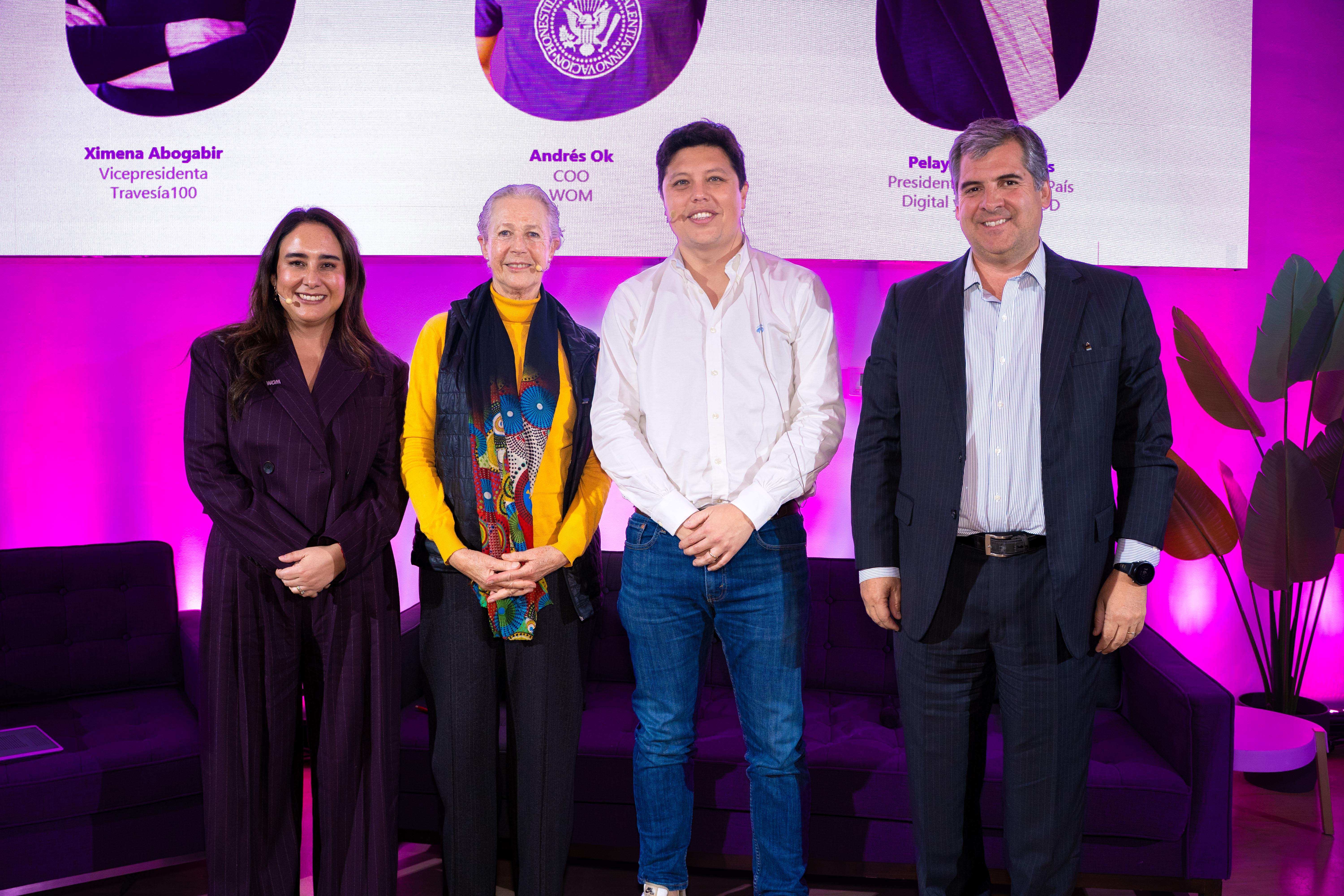
This was one of the main themes of the “Digital Horizon” panel, held as part of the presentation of WOM’s 2025 Sustainability Report, where representatives from the technological and social ecosystem gathered to discuss Chile’s digital future over the coming years.
During the opening remarks, WOM CEO Chris Bannister stated that sustainability is a core part of the business and of the impact companies can generate in society. “We do not do this because it is a trend. We do it because it is the right thing to do, and because it also drives company performance,” he said.
The executive highlighted that, following its financial reorganization, the company was able to move forward with connectivity projects considered strategic for the country, including infrastructure deployment in Antarctica and the expansion of fiber optic and 5G networks. According to Bannister, WOM completed more than 7,500 kilometers of fiber optic infrastructure and advanced the development of connectivity in extreme and remote areas across the country.
The discussion also focused on how Chile can leverage this infrastructure to face the next major technological transformation: artificial intelligence.
Pelayo Covarrubias, president of Fundación País Digital, emphasized that Chile is currently among the leading OECD countries in terms of connectivity, the result of decades of public-private collaboration and a highly competitive industry. However, he warned that the main challenge is no longer simply expanding networks, but creating the capabilities to use them productively.
“The question today is how we take advantage of that connectivity. Whether it has allowed us to become more productive, improve quality of life, and increase our competitiveness,” he said.
Covarrubias compared the impact smartphones had over the past decade with the scenario now emerging through artificial intelligence. “We are facing a massive transformational change. In five years, artificial intelligence will change the labor market, education, healthcare, and the way we live,” he stated.
In that context, he argued that technology companies will play a key role in anticipating these changes and preparing people to adapt to them. “Companies most exposed to technology also have the responsibility to anticipate the future and help people understand the new world that is coming,” he added.
Another topic that shaped the discussion was population aging. Ximena Abogabir, vice president of Travesía100, warned that Chile “is no longer a society that is aging, but rather an aged society,” noting that people over 60 currently represent nearly 19% of the population, a figure expected to exceed 30% by 2050.
In this context, she questioned the fact that many diversity strategies still fail to incorporate the age variable and warned that the digital divide could also become a public health, economic participation, and social wellbeing issue. “Digitalization today is no longer just a technological issue. It is social productivity, economic participation, and wellbeing,” she said.
Abogabir also called for more inclusive service models adapted to different population segments, especially older adults, promoting more accessible digital tools and technological literacy processes.
From WOM, Vice President of Operations Andrés Ok stated that the industry’s challenge can no longer be limited solely to deploying infrastructure, but must move toward building closer relationships with communities and users. “We are not thinking about this only from the perspective of antennas and investment. We are also thinking about it from the perspective of human interaction,” he said.
The executive highlighted that the company’s stores have become spaces for digital support and learning for thousands of people, especially older adults and users from rural areas. “Technology is neither good nor bad on its own. The way it is used makes all the difference,” he noted.
WOM currently operates nearly 200 stores throughout the country and employs more than 2,000 people who, according to the company, also play a role in providing digital guidance and support to users who need assistance using technological tools.
The event concluded with a shared reflection among the panelists: digital infrastructure alone is no longer enough. The real challenge in the coming years will be ensuring that more people can actively participate in the digital economy and society, in a context marked by the rapid advancement of artificial intelligence and new technologies.
About WOM
WOM Mobile SpA is a telecommunications company that provides mobile and fiber optic services. Since arriving in Chile in 2015, it has positioned itself as one of the operators with the largest national coverage, building one of the country’s largest networks in just a decade, with more than 6,300 owned antennas. Recognized for its customer-centric approach, WOM has received the BCX and PXI awards for best customer experience. For more information, visit sobrenosotros.wom.cl or download the App WOM app, available on the App Store and Google Play.